Background
- By lindamartini
- 12 July, 2012

I was born in Catignano the 24th of July 1942. It is very hard to find Catignano on the map, it is a little town 30 km from Pescara. The house where I was born was 3 1/2 km from Catignano, I was the youngest of four born when my mother was 32 and my father 34. The oldest child was Rosina born 1935, then 2 sons: Domenico 1937 and Gino 1939. I was born in the middle of 2nd World War. My father was called to go to war but because he had 4 children he was exempt and he always said that I saved his life!
In 1939 my father separated from his brother Luigi and he bought 2 hectares of land, this is where he built the house where I was born. Later he managed to buy another 3 hectares so in total we had 5 hectares of land. It was here that I lived for most of my youth. The house had only 3 rooms: a barn big enough to fit 4 cows, a kitchen and one bedroom. In the kitchen we had a table 6 hand made chairs, shelves around the walls to store utensils, a fireplace and a little sink (with no running water). On top of the sink was a little cupboard where we used to put glasses and cups. Around the house you could see a shed made of cane used for storing goods, un forno to cook bread and other small sheds for animals. We use to have lots of animals: chickens, ducks, geese, turkeys, pigs, sheep, cows, a donkey and always a dog and a cat.
To survive in those days we had to farm the land and produce almost every thing (meat, milk, cheese, oil, flour, pasta, bread, all kind of fruits and so on). My mother use to make her own bed sheets out of linen and she also made linen table cloths and linen tea towels. She also used to knit and sew in wintertime. Even us kids had to help with the everyday chores. No hands were left idle.
My father was very ambitious. He was a very good farmer and a good provider, but he was also a very bossy and a very strict man. He would go to work in the field and would take the two boys with him and gave them jobs to do and no whinging about it.
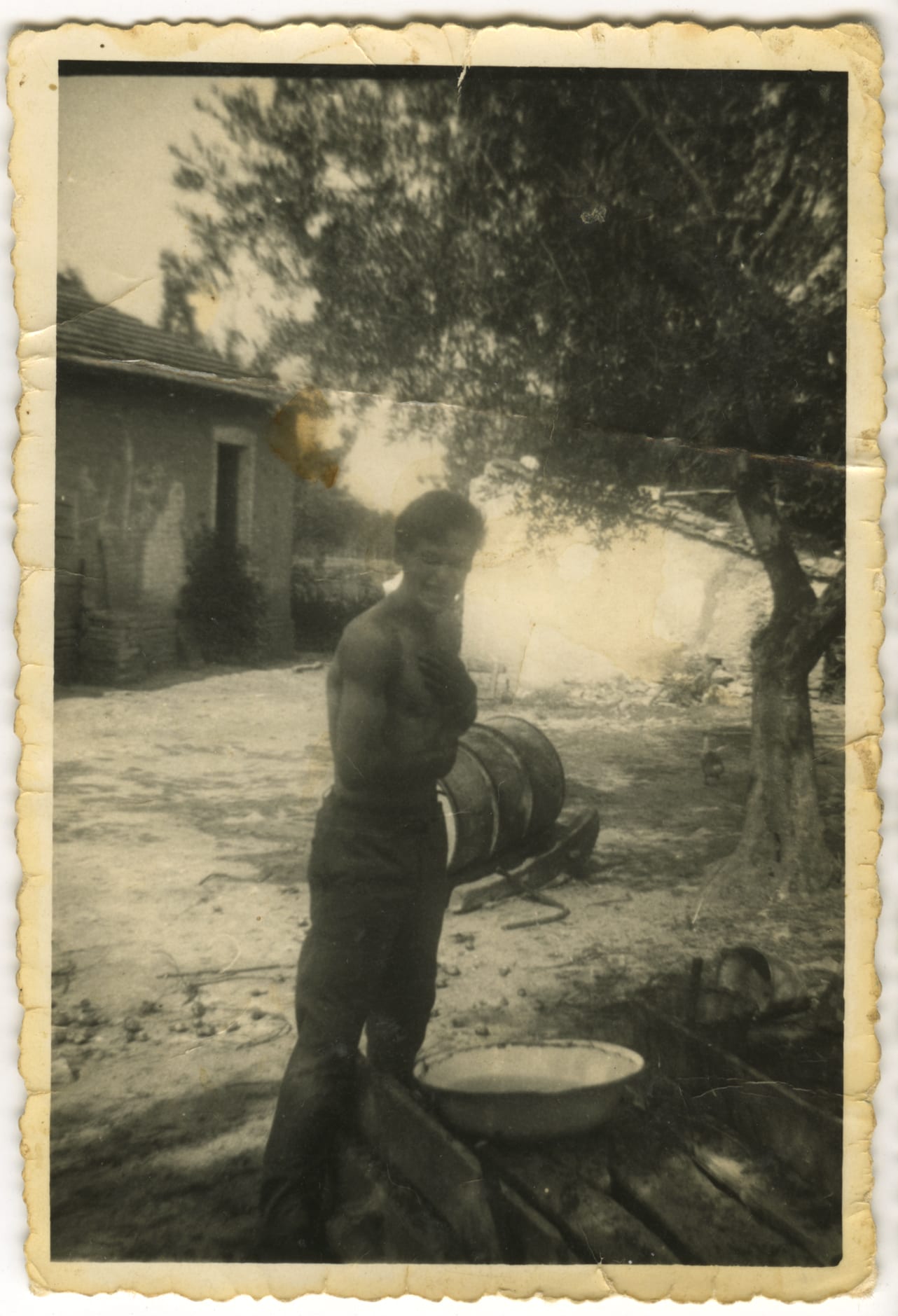
Mimi washing himself out the front of our house in Catignano-Verano around 1956-57
My mother and us girls had to do the cooking, housework and feed the animals around the house and after we finished these tasks we would have to go outside to help the men.
In those days it was logical to make the children work; it was a way of life, small children small jobs big children big jobs!
I remember when I was about 5 years old I had to feed the young animals such as chicks, ducklings and turkeys, I had to pick up fire wood and pick the olives. These were very easy things to do but as you grew older you got more responsibility and harder things to do.
Although us children had to help working the land, at the age of 6 we also had to start school. After the war there was no special place called “school”. A teacher would go to a private house and all the children in the neighborhood would get together to learn to read and write. The teacher would have groups of children from 6 to 12 years and sometimes older. Because of the war some children missed few years of school.
I remember that my sister was going to school in a house about 3 km away from our home. I was about 4 1/2 years old and I wanted to go to school too, so some times she would take me with her. But because we had to walk so far and occasionally the road was muddy I used to get tired and she had to carry me on her shoulders. What a stressful time for Rosina an 11 years old! But I was so happy because I had so much attention from the teacher and all the other students.
School time was 8.30am to 1.30pm. In the afternoon you go home, have some to eat and by then some work was ready for you around the house or in the fields. Having 1/2-day school meant that children had homework to do which was done at night after their chores. I remember very well when my brothers and sister would sit around the kitchen table doing homework. I always wanted to sit with them and do what they were doing but of course I would only scribble on paper or annoying the others. At that time there was no electricity in the house and to do the homework we had il lume a olio, we had also il lume a carburo something like the moka expresso coffee machine.
Living in a small farm and working with primitive tools was not easy but we made the most with what we had and we managed to make enough food for us and some to sell to other people. Many others struggled just to get food on their table. There were people that would go to work just to get a decent meal.
At that time, many other farmers didn’t own their own land or a house, they had to work somebody else’s land, land of “Big Padroni” or rich people such as; baroni, conti or marchesi.
The system was referred to as sharecropping, where the land owner and the farmer would split the crops 50/50. However, many land owners would greedily write up contracts where they would take 3/4 and leave only 1/4 to the farmer. Basically the people who worked other peoples land were considered to be like slaves. Many farmers would have to steal some of the owners crops and sell them at the local markets to make some extra money to help their families.
The work of a farmer was considered the lowest job in society. Farmers were discriminated against by the people who lived in town. I remember well when we went to the market or to a festival in town you could hear people saying, “There are a heap of peasants in the piazza.” They were harsh words, especially since it was the farmers who supported the town by selling their fresh produce at the markets.
Every Monday my mother would go to the markets to sell our goods. She had to walk 3km into town with a basket balancing on her head full of chickens, eggs, fruits and vegetables. My father would go to the fairs to sell live stock; pigs, calves and lambs. The money we made from these goods would go to buy sugar, salt, shoes and clothes.
To survive we had to make many sacrifices, we were always working, paying our taxes and praying to the Lord for a good crop because a lot of times bad weather would destroy everything. My father was very ambitious and wanted to provide our family with a better life, but there was little hope to see this progress he desired.
As peasants, the cultural divide of that time didn’t allow for growth. If you were born in poverty, you died in poverty. This was because the social system was not equitable and 80% of farmers born before the first World War were illiterate. My father did not go to school, instead he learnt to read and write from his younger brother (Luigi) who did go to school. My grandfather believed, as my father would always tell me later, that only one person in the family needed to be able to read and write.
My mum, Aida Di Clemente went to school for only 2 years. She came from a family of 11 children, 4 girls and 7 boys. As she was the eldest girl she had to stop going to school to help around the house and look after her younger siblings.
The Di Clemente family was a little better off. My grandparents Guistina and Michele ran the mill of Baron Corvi. All the farmers in the area and in neighboring towns would come to grind their wheat at the Corvi mill. The mill became known as “Maccaccione Mill”, which was my grandfather’s nickname. The mill ran really well and it was fairly profitable.
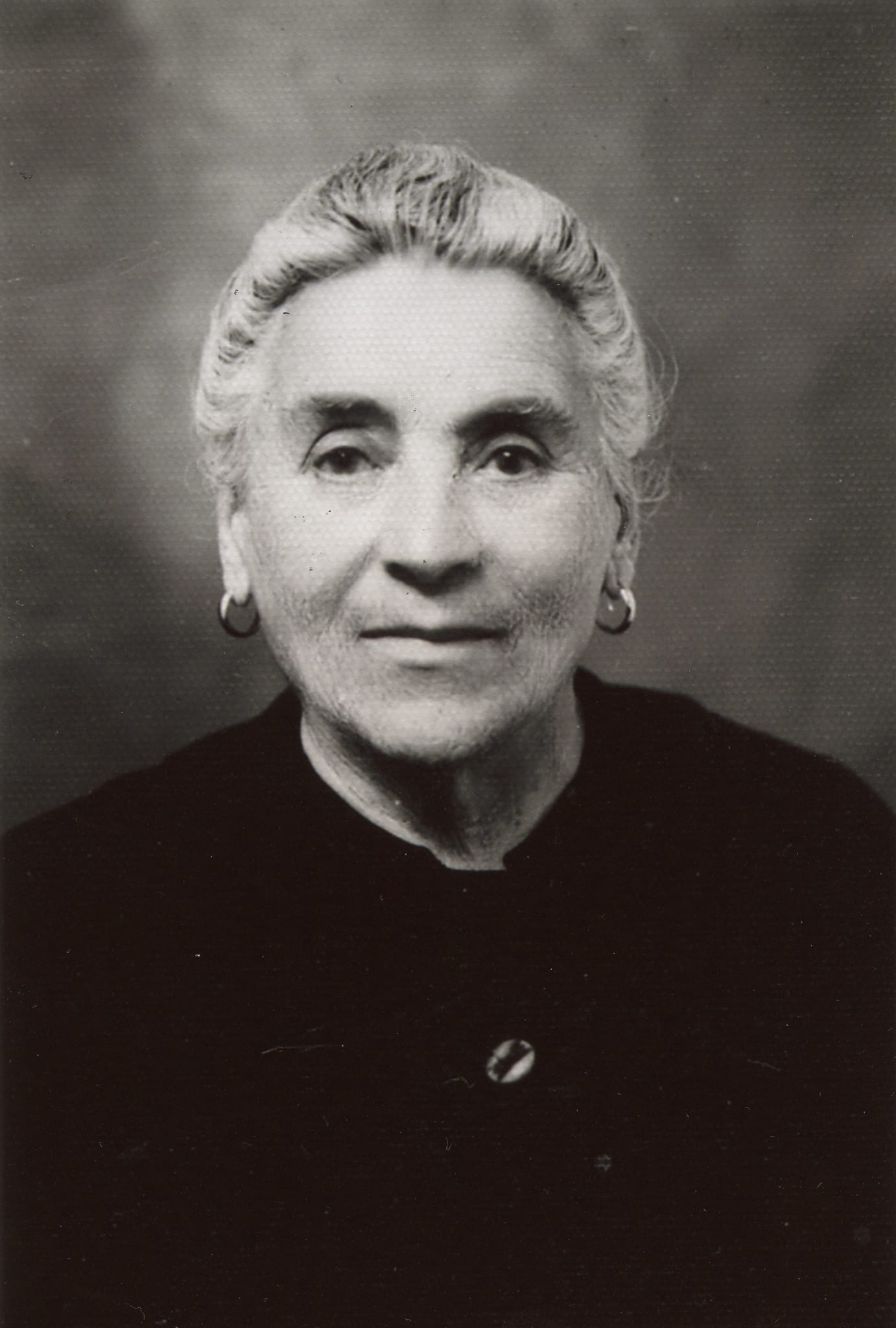
Pace Giustana in Di Clemente 1950-1955
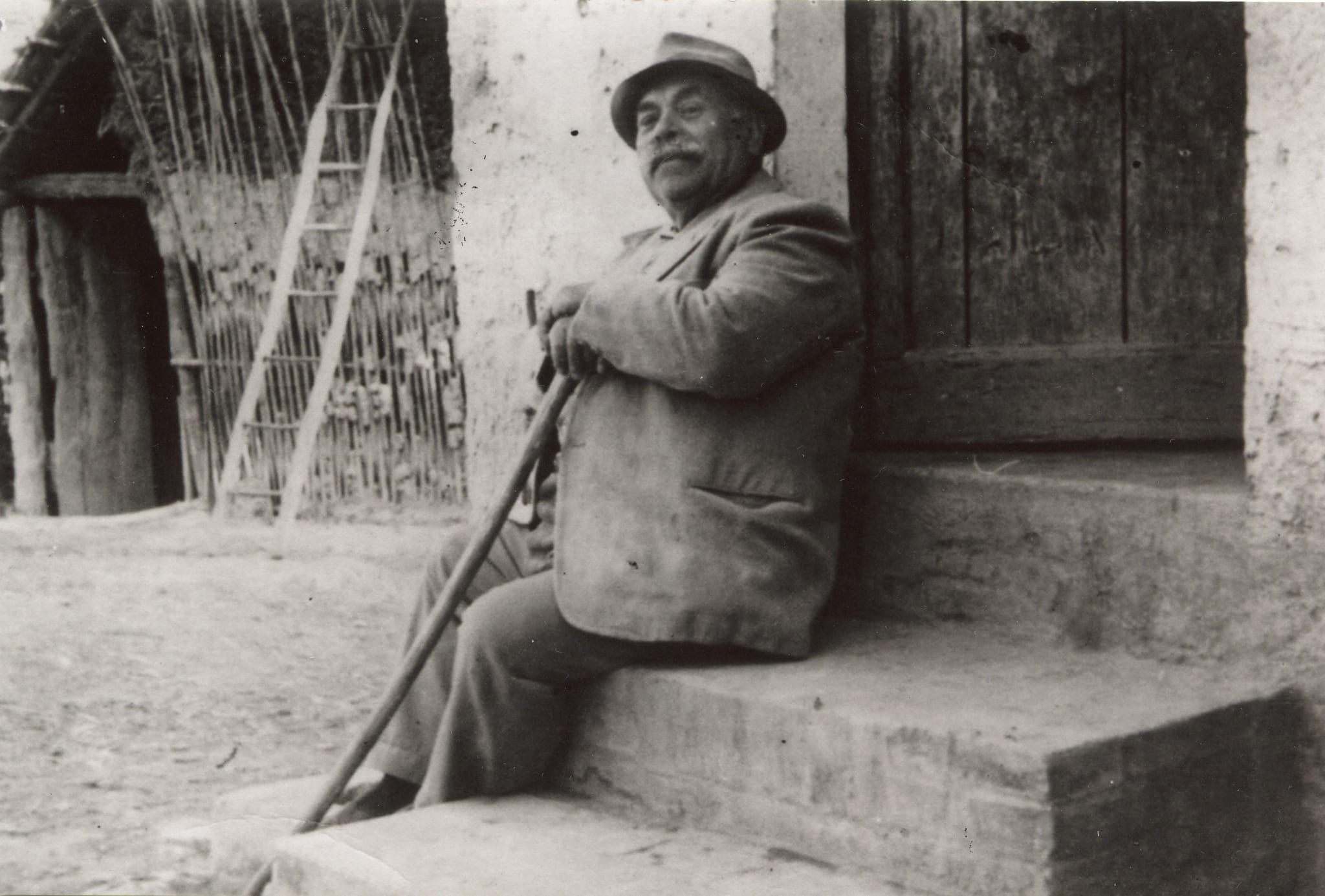
Michele Di Clemente 1950-1955
My grandparents were always busy serving the needs of their clients so the eldest children had to run the house, tend the land, do all the chores and sell their fruits and vegetables at the market.
In 1934 Aida was married to Costantino Trabucco. Costantino had 6 sisters and 4 brothers (two of which died in the First World War, Enrico and Valentino). Even Costantino’s parents, Domenico Trabucco and Rosa Lizzi, ran a mill but it was much smaller and less popular. It was called the “Mulinuccio” and it was situated 3km from Catignano in the Sterpara district, very close to Michele Maccaccione’s mill.
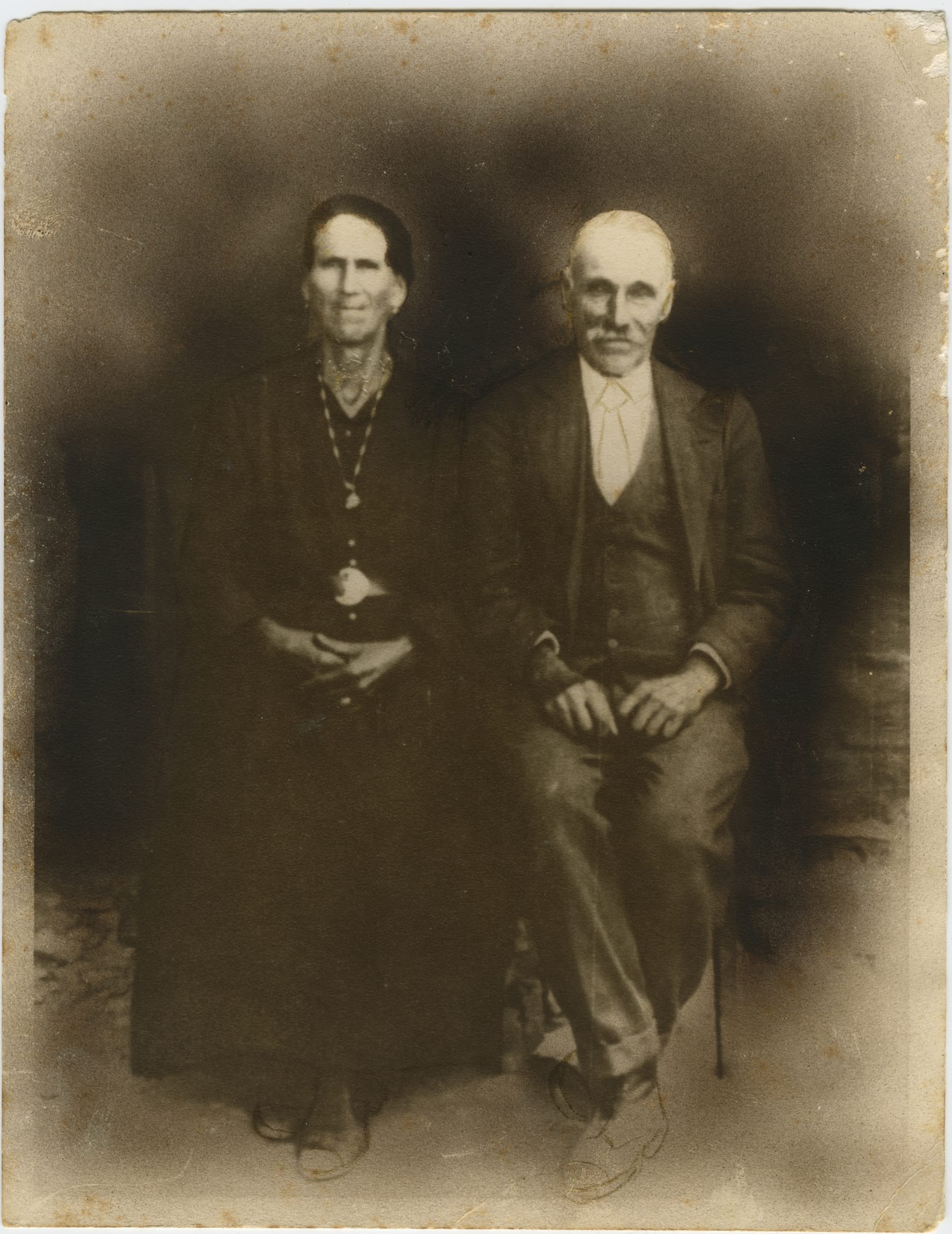
Rosa Lizzi and Domenico Trabucco
After they were wed, Aida went to live with Constantino together with her in-laws and with her brother in law, Luigi. Luigi later married the war widow Rosa Ranieri who had two small children, Antonio and Nicetta. The two brothers lived together for 5 years, which was common in those times.
Then their families began to grow. In 1935 Rosina my sister was born and in 1937 my brother Domenico was born. It became impossible to live in the small house with 4 children. My father decided to get a loan and bought some land in Verano, Catignano, it was an area far away from the main road. In the same year, 1939, my brother Gino was born. Right after his birth my family moved to their new house in Varano. Three years later I was born in 1942.
Where we lived there were no paved roads, no running water and no electricity. My mother was used to these utilities and she suffered a great deal when they first moved. Later as with many things, she learned to adjust and make do with what we had.